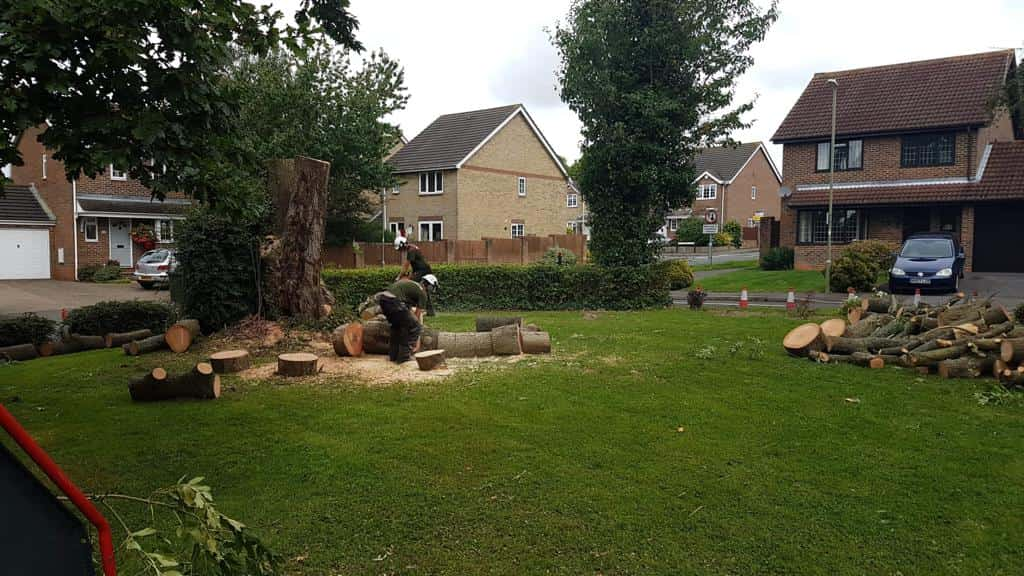
Trees add character, shade and natural beauty to gardens, but they also need appropriate care to remain healthy and manageable. As branches grow, they may extend over roofs, obstruct pathways or become damaged, making professional tree maintenance an important consideration for property owners.
Two common terms used in tree care are tree cutting and tree trimming. Although they are sometimes used interchangeably, they can refer to different types of work depending on the purpose and extent of the cutting involved. Understanding these differences helps homeowners choose the right service for their trees.
For property owners in Haslemere, Surrey, knowing when to arrange tree cutting or trimming can help maintain outdoor spaces, manage overgrown branches and address potential safety concerns.
What Is the Difference Between Tree Cutting and Tree Trimming?
Tree cutting is a broad term that describes cutting branches or sections of a tree. Depending on the context, it can include removing damaged limbs, reducing selected branches or cutting down an entire tree. The appropriate method depends on the tree’s condition and the reason for the work.
Tree trimming generally refers to removing selected branches to manage a tree’s shape, size or growth. It may also help maintain clearance around buildings and paths when carried out with suitable techniques.
The main difference is the purpose of the work. Trimming usually focuses on maintaining a tree’s appearance, growth and clearance, while tree cutting can describe a wider range of tasks, from selective branch removal to complete tree removal.
Because these terms can overlap, it is important to explain the problem you want to address when contacting a professional tree surgeon.
When Is Tree Trimming the Right Choice?
Tree trimming is often suitable when a tree has become overgrown but remains healthy and structurally sound. Carefully selected cuts can help manage its shape while preserving its natural form.
Managing Overgrown Branches
Branches that extend towards roofs, sheds, fences or garden structures may need attention to maintain suitable clearance. Trimming can remove selected growth without unnecessarily reducing the entire canopy.
A professional tree surgeon will assess the tree’s structure and identify which branches can be removed while maintaining a balanced appearance.
Improving the Appearance of Your Garden
Overgrown branches can make a garden feel crowded or prevent sufficient light from reaching certain areas. Appropriate trimming can help manage the canopy and improve the appearance of the surrounding space.
However, excessive cutting can leave a tree unbalanced and may encourage weak regrowth. Good tree maintenance focuses on removing the right branches rather than simply cutting away as much growth as possible.
Removing Small or Crossing Branches
Branches that rub against one another can cause wounds that may become entry points for decay. Selective trimming can reduce this contact and remove certain damaged or poorly positioned growth.
The work should be planned carefully to avoid unnecessary cuts and preserve the tree’s natural structure.
When Is More Extensive Tree Cutting Necessary?
Some situations require more than routine trimming. The correct approach depends on the extent of the problem, the species of tree and whether the tree can remain safely in place.
Removing Dead or Damaged Branches
Dead, broken or severely damaged branches can become hazardous, particularly when they extend above areas used by people. Removing affected limbs can help reduce the risk of falling branches and prevent damaged material from remaining in the canopy.
If damage affects major limbs or the trunk itself, a more detailed assessment may be needed to determine whether the tree remains structurally sound.
Reducing Selected Parts of a Tree
Where a tree has grown beyond its available space, a suitable reduction may help manage its spread. This work involves carefully selecting branches and reducing their length while maintaining the tree’s overall structure.
Tree reduction is not the same as indiscriminate cutting. Poorly planned cuts can damage the tree, affect its appearance and lead to excessive or weak regrowth. A professional assessment helps establish whether reduction is appropriate.
Removing a Tree That Cannot Be Retained Safely
In some circumstances, complete tree removal may be necessary. A tree that has suffered extensive structural damage, severe decay or significant instability may present a risk that cannot be managed adequately through trimming.
Not every damaged tree needs to be felled. A tree surgeon should assess its condition and consider whether pruning or another maintenance method can address the problem before recommending removal.
Why Professional Tree Surgery Matters
Tree work requires an understanding of how trees grow, how branches respond to cutting and how different techniques affect long-term health. Removing too much foliage or making inappropriate cuts can weaken a tree and create further maintenance problems.
Professional tree surgeons can identify the most suitable approach for each tree, whether the requirement is routine trimming, removal of damaged branches or more extensive cutting. They can also plan the work around nearby buildings, boundaries and garden features.
For homeowners in Haslemere, Surrey, professional advice is particularly useful when trees have become difficult to manage or when branches are close to property structures.
How Often Should Trees Be Trimmed?
There is no single schedule that suits every tree. The appropriate frequency depends on the species, growth rate, age, condition and location. Some trees need only occasional maintenance, while others may require more regular attention to manage clearance or address developing problems.
Rather than trimming a tree unnecessarily, look for specific signs that work may be needed, such as damaged branches, excessive growth near structures or branches that are rubbing together.
Regular visual checks can help you identify changes early, although problems within the canopy or trunk may require a professional inspection.
Tree Cutting and Trimming in Haslemere, Surrey
Choosing between tree cutting and trimming starts with understanding what you want to achieve and what your tree needs. While trimming may be enough to manage overgrowth and maintain clearance, damaged or structurally compromised trees may require more extensive work.
LM Tree Surgery Haslemere provides tree surgery services to help property owners maintain their trees and manage concerns safely. If you have overgrown branches, damaged limbs or a tree that requires professional attention, contact our team to discuss your requirements and arrange an assessment.
Conclusion
Tree cutting and tree trimming can overlap, but the most appropriate service depends on the purpose of the work and the condition of the tree. Trimming generally focuses on managing selected growth, while cutting can describe a broader range of work, including the removal of damaged branches or an entire tree.
For property owners in Haslemere, Surrey, professional tree surgery can help ensure that the right work is carried out with the tree’s health, appearance and surroundings in mind. If you are unsure which service your trees need, LM Tree Surgery Haslemere can help you identify a suitable approach.
Call us on: 01428 770 497
Click here to find out more about LM Tree Surgery Haslemere
Click here to complete our contact form and see how we can help with your tree needs.